
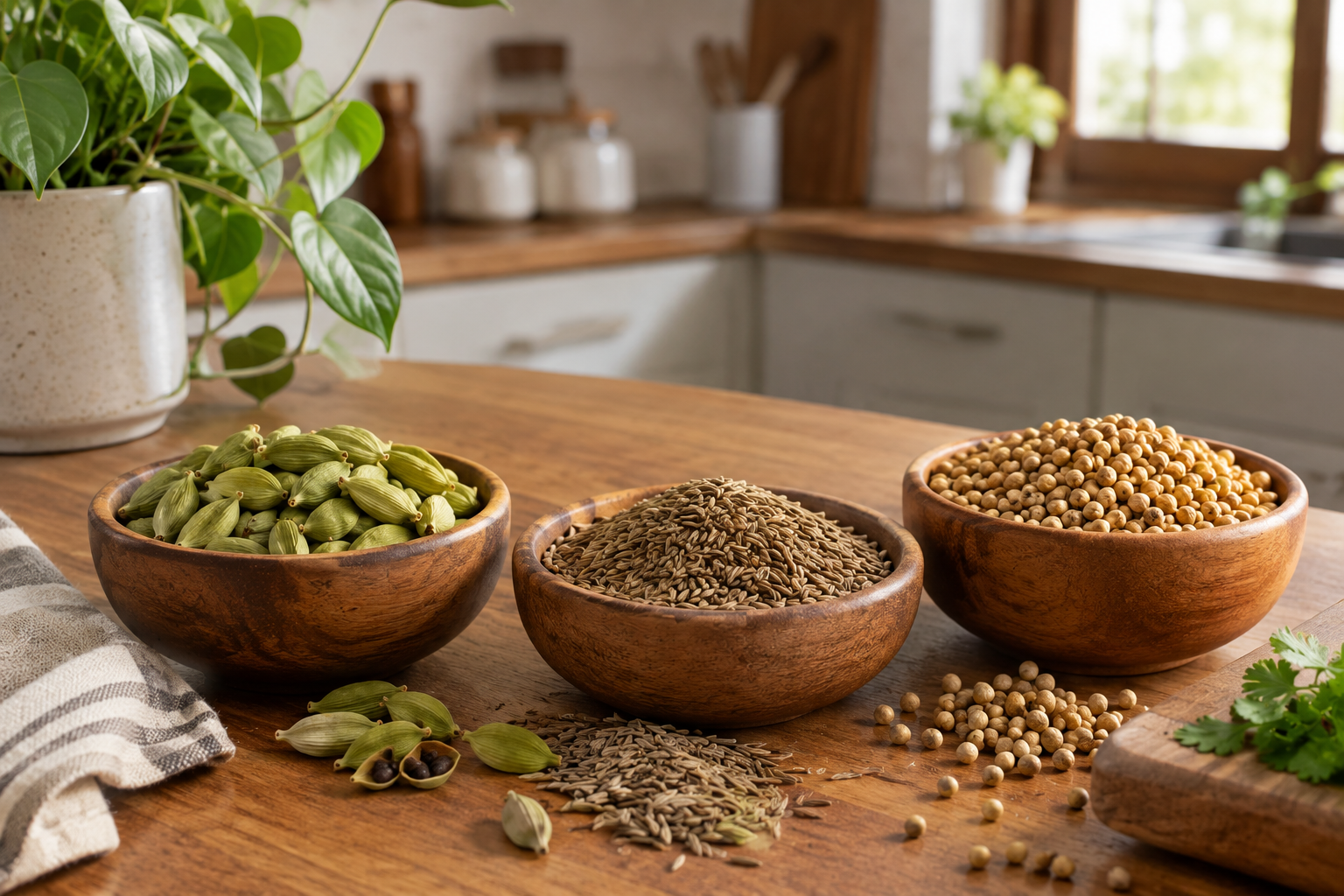
Cardamom, Cumin, and Coriander: The Three C’s of Indian Spices
Take a look at your spice box the next time you're cooking. Notice how some jars sit untouched for months while a few keep needing a refill? Ours are exactly the same. Three of them empty out faster than everything else combined.
Cardamom, cumin, coriander. Nothing exotic, nothing anyone shows off about. But they're in the dal on a regular Tuesday and they're in the biryani for a wedding, and most of what we grew up eating simply doesn't work without them. At Berac we buy these straight from farms in Kerala's spice belt, so we handle them more than most people do. Here's what's worth knowing.
Cardamom
Split a good pod between your fingers and you'll smell it before you've done anything else with it. Sweet, a little floral, with something cool sitting underneath.
What always surprises people is how far it stretches. The same spice goes into payasam and into mutton curry, into chai, into the sulaimani everyone drinks after a heavy lunch when nobody wants to move. Not many ingredients manage that.
Kerala is where the good stuff grows, and Idukki more than anywhere. The hills up there stay under mist half the morning, the rain is steady, and cardamom happens to love exactly those conditions. Generations of farmers have built a reputation on it.
Buying it is mostly about smell. If you have to bring the pod right up to your nose, the oils have already gone and there's not much left to work with. Look for proper green, not that pale washed-out colour, and pods that feel plump rather than hollow.
Cumin
There's a sound that happens before anything else in most kitchens. Hot oil, a spoon of jeera, and that few seconds of crackling. That's the base of half of what we cook, and it's such an automatic step that most of us do it without thinking about it at all.
Cumin brings the warmth. Earthy, slightly nutty, a bit peppery if you chew a seed on its own. Whole in a tempering, ground into masala, dusted over curd rice, it just fits almost anywhere you put it.
Nobody was thinking about antioxidants when jeera went into everything at home, but they're in there, and it's been part of our diets for a very long time for good reason.
To check quality, rub a few seeds between your palms and smell them. Strong and earthy is what you want. Even colour, no stalks, no grit. Cheap cumin usually shows up as dust at the bottom of the packet.
Coriander
Nobody names coriander as their favourite spice. Ask us which one we'd struggle most without, though, and it might well be this one.
It goes into nearly every masala we make, usually in the biggest quantity, and it does a job none of the others can. It takes the edge off chilli, gives cumin something to lean against, lets cardamom and clove come through without any of them shouting. On its own the seed is mild and slightly sweet, with a faint citrus note tucked away in there.
One tip we give everyone: buy seeds, not powder. Coriander loses its aroma fast once it's ground, and grinding a small batch takes two minutes. You'll taste it the first time.
Why the Three Work Together
Put them side by side and you can see the division of labour. Cardamom handles fragrance, the part you notice before the food reaches the table. Cumin builds the base, the warmth running underneath everything. Coriander keeps the peace between them and stops any one flavour taking over.
That's really why they turn up together in so many recipes. They're not competing for the same job.
How to Choose Fresh and Authentic Spices
Open a packet and smell almost nothing? That's usually the first sign. Fresh spices announce themselves, there's rarely any mistaking it.
Colour tells its own story too. Dull and faded means old. Unnaturally bright sometimes means something was added that shouldn't have been.
Where it came from matters more than most people realise. Idukki's altitude and soil suit spice farming particularly well, which is why more people now prefer to buy spices from Idukki directly rather than pick up whatever's sitting on a shop shelf. And it isn't only about origin, how the spice was dried, cleaned, and packed decides whether any flavour is left by the time it reaches your kitchen.
Why Choose Berac
We work directly with farms in Idukki and a few other spice belts across Kerala, with growers who still do things the traditional way. Every batch goes through proper cleaning and quality checks before packing, so what reaches you is close to how it tasted at the source.
Serious cardamom suppliers in Kerala work this way for a reason, the shorter the chain, the less gets lost. Spices online shopping has made that whole chain shorter for everyone, which is honestly the best thing to happen to home cooks in years.
Three spices, one kitchen, and a tradition that's been running for a very long time. If you'd like to taste the difference, buy Kerala spices online from Berac and let the spices do some of the work for you.
FAQs
1. Which of the three is used most in Indian cooking?
Cumin, comfortably. It's in most temperings and most masalas across nearly every regional cuisine.
2. Should I buy whole spices or powder?
Whole, wherever you can manage it. They hold aroma far longer, and grinding fresh takes a couple of minutes.
3. How long do these spices actually stay good?
Whole spices keep well for a year or more if stored airtight and away from light. Powders start fading after three or four months.
4. Why is Idukki cardamom considered better?
The altitude and climate slow the growing down, which leaves more essential oil in the pod. More oil means more aroma and more flavour.
5. Does Berac supply spices in bulk?
Yes, we supply retailers, restaurants, and other businesses that need consistent quality at scale.